New plants for pollinators: colour, continuity, and purpose
By
01 April 2026
Interest in pollinator-friendly planting continues to grow, driven by a deeper awareness of biodiversity and the role gardens play in supporting it. Bees, butterflies, and other insects rely on a steady supply of nectar and pollen throughout the season. Even small gardens, balconies, or containers can make a meaningful contribution.
Pollinator planting works best when it focuses on continuity. A mix of plants that flower at different times helps ensure food sources are available from early spring through late summer and beyond. Structure matters too. Healthy, accessible flowers supported by a clear planting design attract more activity than scattered blooms.
Flowering plants that invite movement
Plants that are rich in nectar and easy for insects to access form the backbone of pollinator-friendly gardens. Buddleja davidii Little Rockstars® Red is a great example. With its compact growth and vivid red flowers, it attracts butterflies while fitting easily into smaller spaces. Its long flowering period helps sustain insect activity through the warmer months.
Lavandula varieties such as Lavandula Sensational! and Phenomenal play a similarly important role. With their open flower structure and high nectar content, Lavenders are among the most dependable plants for bees. Their long flowering period and tolerance of dry conditions make them especially valuable as pollinator planting becomes more climate-aware.
Salvia such as Salvia Feathers Flamingo and Feathers Peacock selections add another strong layer. Upright flower spikes rich in nectar draw constant insect activity, while staggered flowering helps extend the feeding season. Used alongside buddleja and lavender, they create a dynamic, living planting scheme full of movement.
Extending the season
Supporting pollinators is not just about peak summer flowering. Late and repeat bloomers help bridge seasonal gaps when food sources become scarce.
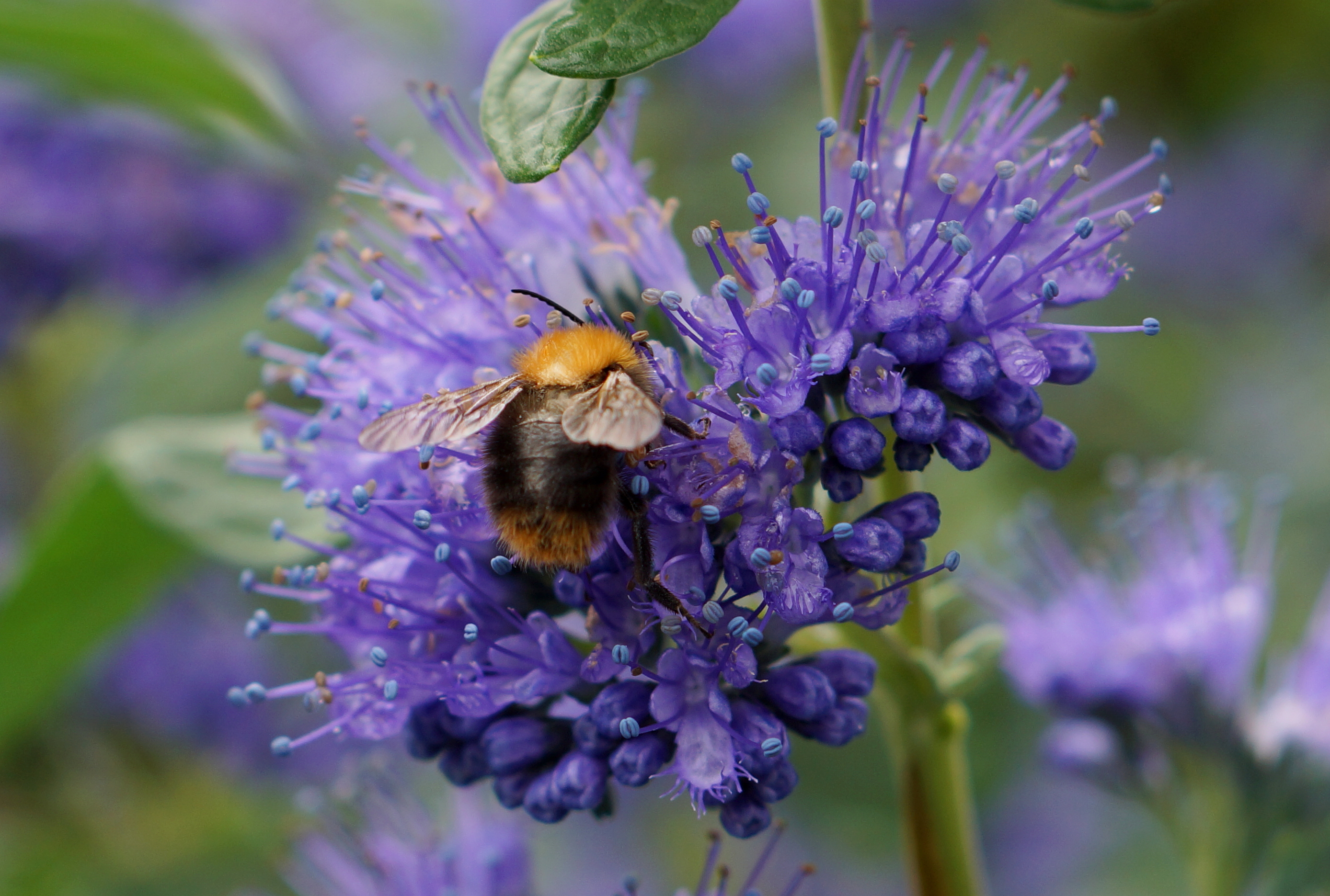
Diervilla Honeybee is known for it’s attraction of bees and butterflies from far and wide, being one of the greatest nectar plants in the assortment with extra-long flowering period and little maintenance requirements. Same goes for Caryopteris Blue Empire, which also adds life to the landscape during the usually less colourful autumn months. Rosmarinus Blue Cascade supports pollinators with blue flowers and a long flowering window, while its trailing habit makes it easy to include in containers, raised beds, or along edges.
Pollinator-friendly planting does not need to feel wild or unstructured. Carefully chosen plants with clear flowering value can support biodiversity while still delivering strong ornamental appeal. By combining accessible flowers, overlapping bloom periods, and thoughtful placement, even a small planting area can become a valuable feeding ground for bees and butterflies.
 English (English)
 Nederlands (Dutch)
 Deutsch (German)
 Français (French)
 Italiano (Italian)
 Polski (Polish)
.jpg)